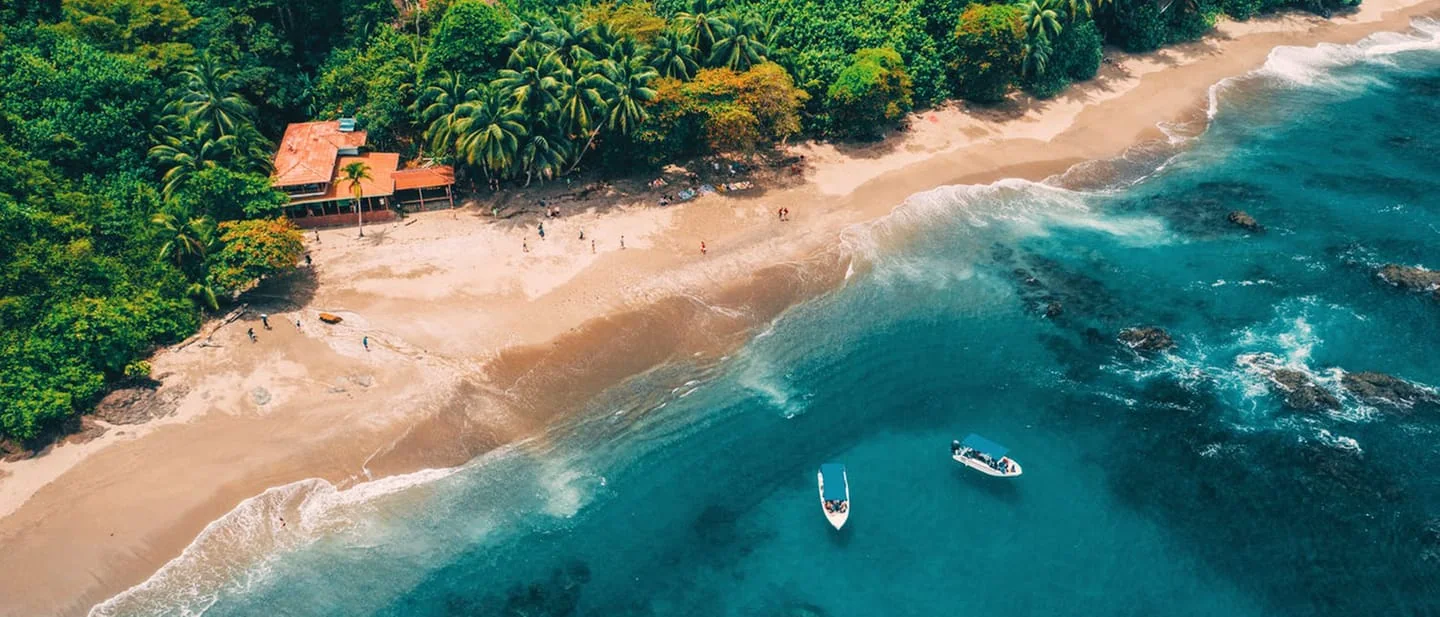
Manuel Antonio from Puntarenas Cruise Port
Published: June 2026 · 6 min min read
Manuel Antonio from Puntarenas Cruise Port: The Complete Guide
Manuel Antonio National Park is Costa Rica's most visited protected area — and when cruise passengers ask "what's the best shore excursion from Puntarenas?", Manuel Antonio is the most common answer. In a single day, you can walk a jungle trail where sloths sleep overhead, spot endangered squirrel monkeys playing in the canopy, and swim in a sheltered bay framed by rainforest.
If your cruise is docking in Puntarenas or Caldera, here's everything you need to know to make Manuel Antonio work as a shore excursion.
Getting from Puntarenas to Manuel Antonio
Manuel Antonio is located approximately 130 kilometers south of Puntarenas along the Costanera Sur (Pacific coast highway). Under normal traffic conditions, the drive takes about 1 hour and 45 minutes each way.
This means a Manuel Antonio shore excursion needs at least 6 hours from the moment you leave the ship:
- 1h 45min drive south
- 3–3.5 hours in the park (guided walk + beach time)
- 1h 45min drive north back to the terminal
A private excursion arranged this way typically runs 6.5–7 hours door to door. Ships departing at 3:00 PM or later can comfortably fit this itinerary. If your departure is earlier, Carara National Park & Tárcoles River — 45 minutes from the terminal, with confirmed departures and no advance custom request needed — is the easier fit.
Inside the Park: What to Expect
The park entrance is in Quepos, approximately 7 kilometers from the park itself. Your guide will handle entrance tickets. A certified ICT-licensed naturalist guide is required by Costa Rican law for all tours inside Manuel Antonio — this is mandatory, not just an add-on.
The park has 4 marked trails and multiple beaches. A typical shore excursion focuses on:
Sendero Playa Espadilla Sur: A flat, paved coastal path running alongside the beach. This is where the majority of wildlife encounters happen, particularly sloths and monkeys in the trees overhead.
Playa Manuel Antonio: The park's iconic beach — a white-sand crescent bay with calm, clear water sheltered by a rocky headland. Ideal for swimming.
The park limits daily visitors to 1,500, which keeps the experience from feeling crowded. Arriving among the first groups of the morning is the best way to see wildlife before the heat — and the crowds — build up.
Wildlife You'll See at Manuel Antonio
Manuel Antonio has one of the highest densities of visible wildlife of any Costa Rican national park. Here's what you're most likely to encounter:
Three-toed and two-toed sloths: Present year-round. They sleep 15–20 hours daily high in the canopy, and only a trained guide will spot them consistently — but they're there.
Central American squirrel monkey (mono tití): Endangered and found in only a handful of locations on earth. Manuel Antonio is one of the best places to see them. They travel in noisy, active groups through the lower canopy and are hard to miss once your guide locates a troop.
White-faced capuchin monkeys: Bold, intelligent, and accustomed to human presence. Keep bags closed — they've learned that tourists carry food.
Coatis: Long-nosed, striped-tailed relatives of the raccoon. Common on the main trails and completely unafraid of people.
Scarlet macaws: Nesting pairs are regularly spotted along the coastal cliffs near the main beach.
Reptiles: Green iguanas, basilisk lizards (the famous "Jesus Christ lizard" that runs on water), and various snake species, though snakes are rarely encountered on the main tourist trails.
The Beaches
Playa Manuel Antonio: The main park beach. Calm, sheltered bay with crystal-clear water. Ideal for swimming and the main rest stop for tour groups.
Playa Espadilla Sur: A longer, wilder stretch running north toward Quepos. Slightly more surf, less crowded, excellent for walking.
Playa Biesanz: A small hidden cove reached via a short side trail. Good snorkeling. Requires an extra 15 minutes round-trip from the main path.
For shore excursions on a cruise schedule, beach time is typically at Playa Manuel Antonio — the safest and most accessible option for all fitness levels.
Booking Manuel Antonio with LoaTours
Manuel Antonio isn't one of our confirmed daily departures — the drive length and the park's strict visitor cap make it a better fit for a private, custom-arranged excursion than a fixed shared tour. Request a private quote and we'll confirm feasibility against your ship's schedule, along with transport, guide and pricing, in writing before anything is booked. A certified ICT-licensed naturalist guide is legally required inside the park regardless of who arranges your visit.
If you'd rather book something today with a confirmed departure, Carara National Park & Tárcoles River covers similar Pacific-coast wildlife — scarlet macaws, a naturalist-led forest walk, and a boat safari through the Tárcoles mangroves — in 6 hours from the Puntarenas terminal, no custom request needed.
Best Time to Visit
Manuel Antonio is open year-round and worth visiting in every season. A few considerations:
February–April (dry season peak): Hot, sunny, minimal rain. Highest visitor numbers — book well in advance.
May–July: Beginning of the wet season, but mornings are typically clear. Excellent wildlife activity. Fewer crowds.
August–October: Rainy season, but Manuel Antonio sits on the Pacific coast (significantly less rain than the Caribbean). Afternoon showers are common; morning tours are generally fine. The forest is intensely green.
November–January: Short transition into dry season. Increasingly busy toward December.
Ready to Plan Your Day?
Whether you want Manuel Antonio arranged as a private custom excursion or a confirmed Pacific-coast tour departing today, our team plans everything around your ship's schedule.
Request Manuel Antonio as a private excursion · Book Carara & Tárcoles now · Questions? WhatsApp us
Ready to Book Your Costa Rica Shore Excursion?
Small groups · Professional guides · Schedules verified before payment.
Browse Tours